When I first encountered Homeopathy, I had no real idea what it was about. I came from a background of Chinese herbal medicine, Ayurveda and Naturopathy, where I loved making and taking herbal concoctions. It felt a little like brewing tea and discovering how different plants affected my wellbeing.
Homeopathy, however, was a very different cup of tea.
During my first year of study, I thought it would be a wonderful idea to take every remedy we were learning about. One by one, I travelled through some of the best-known homeopathic remedies. I imagined that each one might heal a different part of me. What I hadn't yet understood was that unless a remedy truly matches your own unique symptom picture, it is unlikely to do much for you. Instead, you may begin to experience something quite different: a proving.
In other words, I was beginning to experience aspects of the remedy picture itself.
I found myself paying closer and closer attention. To feel and recognise parts of a remedy within my own body was like slowly making friends with a substance from nature. I was beginning to understand its character, its qualities and something of its intrinsic nature. Later, I realised it would probably be impossible, and unnecessary, to prove every remedy. Some simply did not belong to my own journey.
Gradually I realised that what interested me most was the individuality of Homeopathy.
A herbal preparation may be chosen for a particular condition, and help many people with similar symptoms. Homeopathy is different. It is not prescribed according to a diagnosis alone, but according to the whole picture of the person: their physical symptoms, emotional life, mental experience and the unique way these are expressed.
It is striking that the essence of a substance from nature can meet the uniqueness of a human being. Each of us has our own fingerprint, our own iris, our own way of being in the world. Homeopathy honours that individuality by recognising that no two people, even with the same diagnosis, necessarily need the same remedy.
Nature as Medicine
Homeopathy has a particular relationship with the natural kingdoms.
Plants, minerals and animals are gifts to both humanity and the art of healing. When I walk through my garden, I often find myself standing quietly among the rosemary and echinacea, wondering about the medicines hidden within the living world around me. It is remarkable to think that every substance has its own story to tell.
But a homeopathic remedy is much more than simply looking at a plant growing in the garden.
How does it become the remedy we use in practice?
Once a remedy has been prepared, however, another question naturally arises.
How do we know what it does?
The answer lies in one of the central practices of Homeopathy: the proving.
The First Proving
In 1790, decades before Homeopathy even had a name, Samuel Hahnemann carried out what became the first homeopathic proving.
Dissatisfied with the harsh medical practices of his time, such as bloodletting and other aggressive treatments, he searched for a gentler and more rational way of healing. While translating a medical text, he questioned why Cinchona bark (China) was effective in treating malaria. Physicians believed its healing power came simply from its bitter, tonic properties, but Hahnemann was unconvinced.
Driven by curiosity, he took repeated doses of Cinchona himself while in good health.
To his surprise, he began to develop symptoms remarkably similar to those experienced by people suffering from malaria: alternating chills, fever and weakness.
This observation became one of the foundations of what Hahnemann would later formulate as the Law of Similars: the principle that a substance capable of producing a pattern of symptoms in a healthy person may help relieve a similar pattern in someone who is unwell.
What Is a Proving?
The process of administering a potentised substance to healthy volunteers and carefully observing every change that follows is called a homeopathic proving.
Over the past two centuries, hundreds of substances have been proved in this way. Through meticulous observation, homeopaths gradually build the remedy picture of each substance, allowing it to be matched to the unique pattern expressed by the person seeking treatment.
The word proving itself offers a useful insight into the process.
Rooted in the Latin probare, meaning to test or to discover through experience, a proving is not about proving something right or wrong. It is about revealing the nature of a substance through careful observation.
A proving is both disciplined and imaginative. It asks us to observe carefully, to record honestly and to remain curious about the subtle dialogue between nature and ourselves. It is rigorous in its method, yet it leaves room for surprise in what it reveals.
Why I Keep Returning
Perhaps that is why I continue to return to provings.
It begins with observation. One person notices something. Others observe it again. Over time, a picture begins to emerge. Little by little, the character of a substance reveals itself, not through speculation, but through careful attention.
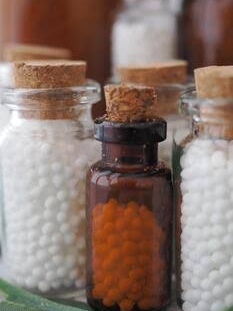
Behind every small remedy bottle lies a story of careful observation, human experience and generations of practitioners trying to understand one small piece of nature a little more deeply.
I think that is one of the things I love most about Homeopathy. It asks us to observe with precision, to remain curious, and to let nature reveal itself in its own time.